

Allergy season in the United States does not follow a single neat schedule. For millions of Americans, it feels like a near year-round struggle because different allergens peak at different times throughout the year, and many of them overlap in ways that keep symptoms lingering from late winter all the way through the first hard frost. Understanding what causes allergies in each season and how to recognize the warning signs early is the most effective way to stay ahead of symptoms before they take over your daily routine.
Texas residents face a challenging allergy calendar due to mild winters and long growing seasons that keep allergens like cedar, oak, and ragweed active longer. Knowing what triggers your symptoms can help you prepare and seek care at our Sugar Land Hospital when severe reactions occur.
What Is Allergy Season?
Allergy season refers to any period of the year when airborne allergens reach levels high enough to trigger immune responses in sensitive individuals. According to the CDC, tens of millions of Americans experience seasonal and indoor allergic reactions each year, making allergies one of the most widespread chronic health conditions in the country. The season varies significantly by geographic location, climate patterns, and which specific allergens are most dominant in a given region at any point in the year.
When Does Allergy Season Start?
In warmer states like Texas, allergy season can begin as early as January when mountain cedar pollen starts releasing in significant quantities. The start date shifts year to year based on temperature trends, rainfall patterns, and wind conditions that influence how much pollen trees, grasses, and weeds release into the surrounding air. A warmer than usual winter accelerates the timeline noticeably and can push the tree pollen season weeks earlier than allergy sufferers expect based on prior years.
What Are the Worst Months for Allergies?
Different allergens dominate different months throughout the year, which is why many allergy sufferers notice their symptoms shifting and changing in character as one season transitions into the next.
Spring Allergy Season (February to May)
Spring is the most intense allergy season for most people because it coincides with peak pollen release from trees, including oak, cedar, birch, and maple, across much of the country. Pollen counts during these months can reach levels high enough to cause severe symptoms even in people who have only mild reactions at other times of the year. The combination of multiple tree species releasing pollen simultaneously makes spring the hardest season for allergy sufferers to find consistent daily relief.
Summer Allergy Season (June to August)
The summer allergy season is dominated by grass pollen from species like Bermuda, Timothy, and Kentucky bluegrass, which release pollen through much of the season alongside increasing mold spore counts. Mold becomes a particular problem during warm and humid summer months, especially after heavy rainfall that encourages mold growth in soil, compost, and decaying outdoor vegetation. People experiencing congestion, sneezing, and itchy eyes that do not improve during summer are likely reacting to grass pollen rather than a cold or other illness.
Fall Allergy Season (August to November)
Ragweed is the dominant fall allergen and one of the most powerful allergy triggers in the country, with a single plant capable of producing enormous quantities of pollen that travel hundreds of miles on the wind. Mold spores also remain elevated as leaves decay on the ground and create ideal outdoor conditions for mold growth throughout the season. Fall allergies frequently catch people off guard because the symptoms closely resemble those of cold and flu viruses that begin circulating heavily during the same period of the year.
Winter Allergies (December to January)
Winter does not bring complete relief because indoor allergens like dust mites, pet dander, and mold become more problematic as people spend more time indoors with windows sealed and heating systems running continuously. In Texas, mountain cedar pollen peaks in December and January, triggering an intense reaction locally known as cedar fever that affects a significant portion of the population annually. Many people mistake cedar fever for a cold or the flu because the symptoms can be severe despite being caused entirely by outdoor pollen exposure.
What Are Common Allergy Season Symptoms?
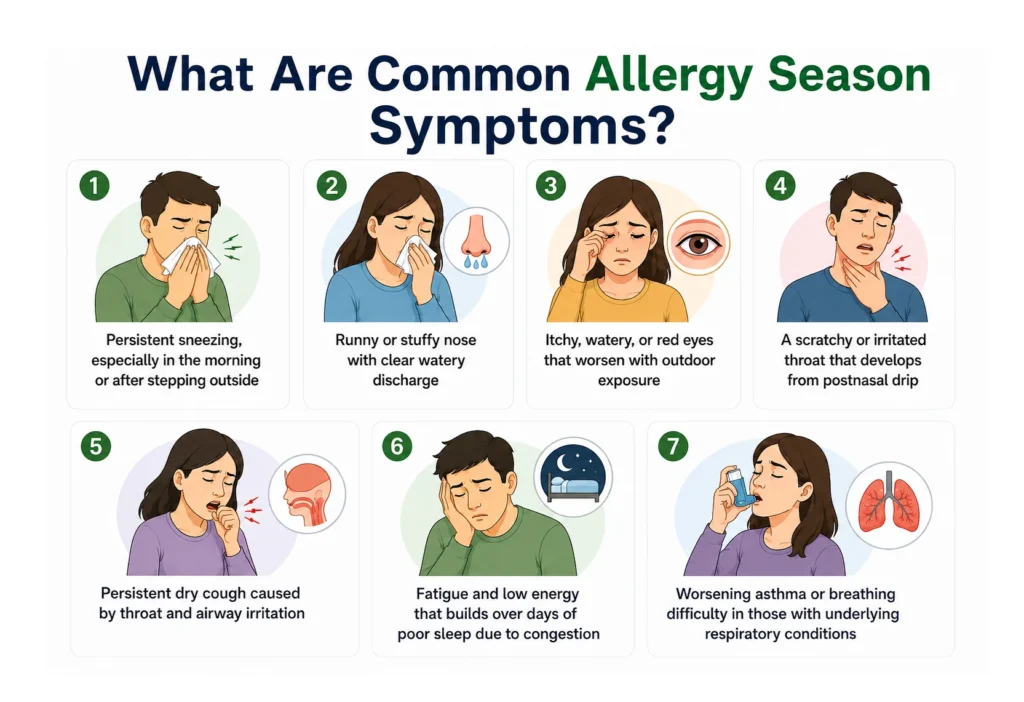
Allergy season symptoms range from mildly inconvenient to significantly disruptive, depending on the individual’s sensitivity level and the specific allergens involved. According to MedlinePlus, allergic rhinitis is one of the most common conditions managed in outpatient medical settings across the United States every year.
- Persistent sneezing, especially in the morning or after stepping outside
- Runny or stuffy nose with clear watery discharge
- Itchy, watery, or red eyes that worsen with outdoor exposure
- A scratchy or irritated throat that develops from postnasal drip
- Persistent dry cough caused by throat and airway irritation
- Fatigue and low energy that builds over days of poor sleep due to congestion
- Worsening asthma or breathing difficulty in those with underlying respiratory conditions
What Causes Seasonal Allergies?
Seasonal allergies occur when the immune system mistakenly identifies harmless airborne particles as dangerous threats and mounts an exaggerated defense response. Here is what drives that reaction:
- The immune system releases histamine and other inflammatory chemicals in response to triggers like pollen, mold spores, and grass
- These chemicals cause sneezing, congestion, itching, and watery eyes that range from mildly annoying to genuinely debilitating
- Genetics plays a significant role in who develops seasonal allergies and how severely they are affected
- Environmental exposure and the timing of first contact with specific allergens also influence how sensitivities develop over time
How Long Does Allergy Season Last?
For people sensitive to multiple allergens, allergy season can last most of the year, with only brief windows of lower symptoms between peak periods. Here is a general breakdown of when different allergens peak:
- Tree Pollen: February through May, often the first and most intense wave of seasonal allergy symptoms
- Grass Pollen: May through August, overlapping with the tail end of tree pollen season
- Ragweed and Mold: August through November, extending allergy season well into fall
- Texas and Southern States: Mild winters mean some level of allergenic pollen is present nearly year-round without the extended cold break northern regions experience
- Conditions like hay fever can persist through multiple overlapping seasons, making year-round management strategies essential
When to Go to the ER for Allergies?
Most seasonal allergy symptoms can be managed with over-the-counter antihistamines, nasal sprays, and allergen avoidance. However, some reactions escalate into medical emergencies that require immediate professional care. Allergy-related symptoms that progress into sinus infections should also be evaluated promptly, since untreated sinus infections can worsen significantly without antibiotic treatment. Visit the ER immediately if you experience any of the following.
- Severe difficulty breathing, wheezing, or a feeling that your airway is tightening or closing
- Throat swelling, hoarseness, or difficulty swallowing that develops suddenly after allergen exposure
- Hives spreading rapidly across large areas of the body, alongside any breathing changes
- Dizziness, lightheadedness, or a sudden drop in blood pressure after allergen exposure
- Confusion, extreme weakness, or loss of consciousness during or after an allergic reaction
- Chest tightness or chest pain that does not resolve with rest or inhaler use during an asthma flare
- Any combination of symptoms suggesting anaphylaxis, which is a severe and potentially life-threatening allergic reaction
Allergy Season Care at St. Michael’s Elite
When seasonal allergies escalate beyond what over-the-counter medications can manage or trigger a serious respiratory or anaphylactic reaction, fast emergency care makes all the difference in the outcome. At St. Michael’s Elite, our experienced medical team provides immediate evaluation and treatment for severe allergic reactions, asthma flares, anaphylaxis, and allergy-related respiratory complications around the clock.
Do not wait to see if symptoms improve on their own. Visit our Sugar Land Hospital today for expert care that helps control your symptoms quickly and ensures nothing more serious is developing. With ER wait times of just under 10 minutes, you can receive prompt medical attention when you need it most.