

When you or someone you love has an infection that suddenly seems much worse, it can be frightening and confusing. Sepsis can develop quickly when the body’s response to an infection begins damaging its own tissues and organs.
Unlike an ordinary infection, sepsis is a life-threatening medical emergency that requires prompt evaluation and treatment. Recognizing warning signs such as confusion, rapid breathing, severe pain, fever or chills, and clammy skin can help you seek emergency care before the condition becomes more severe. Our Sugar Land Hospital is available to provide prompt evaluation and treatment for serious medical emergencies.
What Causes Sepsis
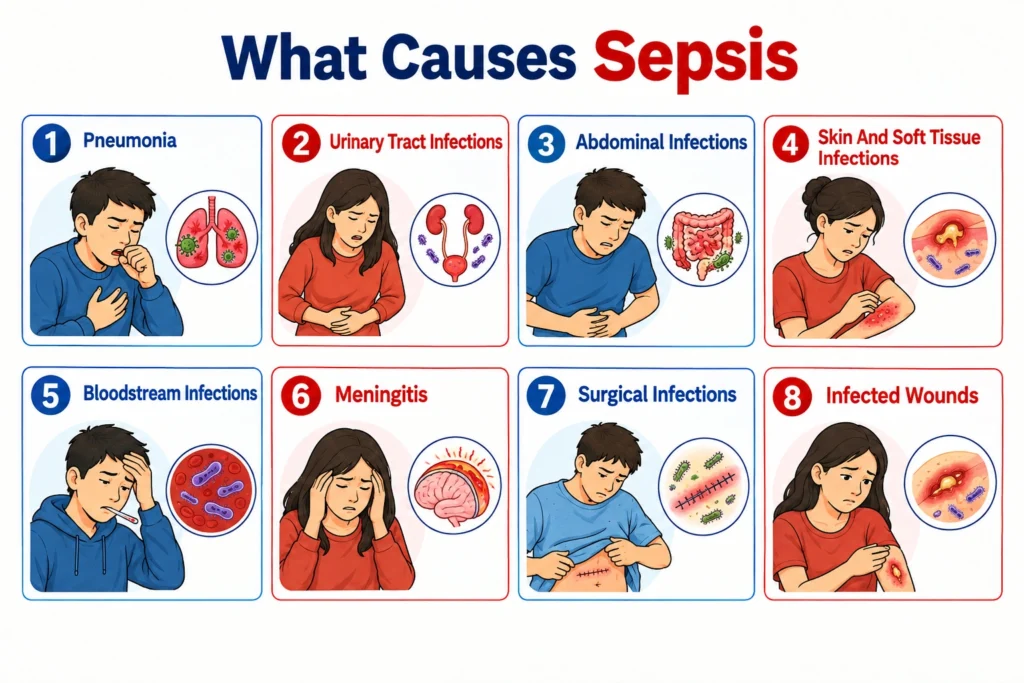
Almost any infection can trigger sepsis, but some infection sites are more commonly associated with it. A U.S. study of more than 7.8 million adult sepsis hospitalizations found that genitourinary infections accounted for 36.7% of cases, while lower respiratory infections accounted for 36.6%.
Pneumonia
Pneumonia is a common infection associated with sepsis, particularly when it becomes severe. Symptoms may include fever, chills, cough, chest pain, and difficulty breathing. Severe pneumonia can impair oxygen levels and affect other organs.
Urinary Tract Infections
A UTI can become more serious when infection spreads to the kidneys or bloodstream. Kidney infections may cause fever, chills, back or side pain, nausea, and painful urination. Prompt treatment can help prevent the infection from progressing.
Abdominal Infections
Infections caused by conditions such as appendicitis, diverticulitis, or a perforated bowel can lead to sepsis. Severe abdominal pain, fever, vomiting, swelling, or tenderness may occur. Some abdominal infections require urgent surgery or drainage.
Skin and Soft Tissue Infections
Cellulitis, abscesses, infected wounds, and other skin infections can sometimes spread into deeper tissues or the bloodstream. Increasing redness, swelling, warmth, severe pain, or drainage may indicate a serious infection. Rapidly spreading symptoms require urgent medical evaluation.
Bloodstream Infections
Microorganisms entering the bloodstream can trigger a severe systemic response and lead to sepsis. Fever, chills, rapid heart rate, low blood pressure, and confusion may occur. Blood cultures can help identify the organism responsible.
Meningitis
Serious infections involving the brain or spinal cord, including bacterial meningitis, can cause sepsis and deteriorate rapidly. Symptoms may include severe headache, fever, stiff neck, vomiting, confusion, or seizures. Suspected meningitis requires immediate emergency care.
Surgical Infections
Infections can develop after surgery at the incision or inside the body. Warning signs include increasing pain, redness, swelling, drainage, fever, or worsening weakness. Some postoperative infections require antibiotics, drainage, or additional surgery.
Infected Wounds
Open wounds, burns, pressure injuries, and traumatic injuries can allow microorganisms to enter the body. Infection may cause increasing redness, swelling, drainage, or worsening pain. Deep or rapidly spreading infections can become life-threatening without prompt treatment.
Dangerous Sepsis Symptoms You Should Never Ignore
Sepsis can worsen quickly and may cause serious changes in how the body functions. If an infection is followed by sudden or severe symptoms, seek medical attention immediately.
- Confusion: Sudden confusion, disorientation, or difficulty staying awake.
- Trouble Breathing: Rapid breathing, severe shortness of breath, or low oxygen.
- Fast Heart Rate: A persistently rapid heartbeat, especially with weakness or dizziness.
- Fever or Chills: High fever, shaking chills, or an unusually low body temperature.
- Low Blood Pressure: Severe dizziness, fainting, or symptoms of poor circulation.
- Cold, Clammy Skin: Pale, cool, sweaty, or mottled skin may signal impaired circulation.
- Severe Pain: Sudden or worsening pain, particularly with signs of infection.
- Little Urine: A significant drop in urination may indicate kidney problems.
- Extreme Weakness: Sudden, profound weakness or feeling unusually unwell.
- Worsening Infection: Spreading redness, increasing swelling, pus, or rapidly worsening symptoms.
If you or your loved ones experience severe or concerning symptoms, search for the nearest emergency room for prompt medical evaluation and emergency care.
How Is Sepsis Diagnosed
There is no single test that confirms sepsis. Doctors combine symptoms, vital signs, physical findings, laboratory tests, and infection testing to determine whether an infection is causing organ dysfunction.
- Medical History and Examination: Doctors review symptoms, infections, wounds, surgeries, and medical conditions.
- Vital Signs: Temperature, heart rate, breathing rate, blood pressure, oxygen levels, and mental status are checked.
- Blood Cultures: Blood samples can identify bacteria or other microorganisms causing bloodstream infections.
- Lactate Test: Blood lactate helps assess tissue perfusion and the severity of illness.
- Blood Tests: CBC and chemistry tests check blood cells, electrolytes, kidney function, liver function, and other abnormalities.
- Organ Function Tests: Doctors assess the kidneys, liver, lungs, brain, circulation, and blood-clotting system for dysfunction.
- Urine and Other Cultures: Samples from urine, wounds, or respiratory secretions may help identify the infection.
- Imaging: X-rays, CT scans, or ultrasound may locate pneumonia, abscesses, or other infection sources.
When to Go to the ER for Sepsis
Sepsis is a medical emergency. If you have an infection and develop sudden confusion, breathing problems, fainting, severe weakness, or rapidly worsening symptoms, go to the ER immediately rather than waiting for the condition to improve.
- Confusion: Sudden disorientation or difficulty staying awake.
- Severe Breathing Problems: Significant shortness of breath or very rapid breathing.
- Fainting: Loss of consciousness or severe dizziness during an infection.
- Signs of Shock: Cold, clammy skin, extreme weakness, or dangerously low blood pressure.
- Little or No Urine: A sudden major decrease in urination.
- Rapidly Worsening Infection: Spreading redness, swelling, drainage, or worsening symptoms.
- Severe Pain: Intense abdominal, chest, or other unexplained pain with infection.
- Extreme Weakness: Feeling suddenly and severely unwell, particularly with fever or chills.
Sepsis Treatment
Sepsis treatment must begin quickly because the condition can progress to organ failure and septic shock. Care focuses on treating the infection while supporting blood pressure, oxygen levels, circulation, and affected organs. Treatment depends on the suspected infection and how severely the body is affected.
Antibiotics and Other Antimicrobial Medicines
When bacterial sepsis is suspected, antibiotics are given promptly to fight the infection. Doctors may initially use broad-spectrum antibiotics and later adjust them based on culture results. Antiviral or antifungal medicines may be used when appropriate.
Intravenous Fluids
IV fluids can help restore circulation when sepsis causes low blood pressure or poor tissue perfusion. Doctors monitor blood pressure, breathing, urine output, and other signs while giving fluids. The amount is adjusted according to the patient’s condition.
Vasopressors
If blood pressure remains dangerously low after appropriate fluids, vasopressors may be used to improve blood flow to vital organs. Norepinephrine is commonly recommended as the first-line vasopressor for septic shock. These medicines require close monitoring in an emergency or intensive care setting.
Infection Source Control and Organ Support
Some infections require procedures to control their source, such as draining an abscess, removing an infected device, or performing surgery. Patients with severe organ problems may also need oxygen, mechanical ventilation, kidney support, or intensive care. Rapid source control can be critical in severe sepsis.
Expert Sepsis Care at St. Michael’s Elite Hospital
Sepsis can worsen rapidly and become life-threatening when an infection begins affecting vital organs. If you are experiencing confusion, difficulty breathing, severe weakness, fever or chills, rapid heart rate, or very little urine, prompt emergency evaluation is essential. With our ER wait times near me being less than 10 minutes, you can receive timely evaluation and emergency care when every minute matters.
Whether sepsis develops from pneumonia, a urinary tract infection, an abdominal infection, or another source, don’t wait for symptoms to become more severe. St. Michael’s Elite Hospital provides rapid evaluation, diagnostic testing, and emergency treatment to identify the source of infection, manage complications, and support your recovery.
Key Takeaways
- Sepsis can develop when an infection triggers a severe response that causes organ dysfunction and can become life-threatening.
- Urinary and respiratory infections are major sources of sepsis, with U.S. research finding genitourinary infections in 36.7% and lower respiratory infections in 36.6% of sepsis hospitalizations.
- Dangerous symptoms include confusion, difficulty breathing, severe weakness, low blood pressure, little urine, and rapidly worsening infection.
- Sepsis diagnosis combines symptoms, vital signs, blood tests, cultures, lactate testing, organ-function assessment, and imaging when needed.
- Treatment may include antimicrobial medicines, IV fluids, vasopressors, infection source control, and organ support.
Frequently Asked Questions About Sepsis
How Long Does It Take to Die From Sepsis?
Sepsis can become life-threatening within hours, but the timeline varies based on the infection, organ damage, and how quickly treatment begins. Early emergency treatment can significantly improve outcomes.
Is Sepsis Contagious?
Sepsis itself is not contagious and cannot spread from person to person. However, the infection causing sepsis may sometimes be contagious, depending on the type of infection and microorganism involved.
How Do You Get Sepsis?
You can develop sepsis when an infection triggers a severe response that causes organ dysfunction. Pneumonia, urinary tract infections, abdominal infections, skin infections, and bloodstream infections are common sources.
Is Sepsis Curable?
Sepsis can be treated, and many people recover when it is recognized and treated promptly. Treatment may include antibiotics or other antimicrobials, IV fluids, medications to support blood pressure, source control, and organ support.