

Understanding what the color of your mucus means can help you identify how your body is responding to infections, allergies, or environmental irritants. Changes in mucus color are often your immune system’s way of signaling that it’s working to protect your respiratory system.
Mucus protects your nose, sinuses, throat, and lungs by trapping dust, bacteria, viruses, and other particles. At times, shifts in color may indicate illness or irritation, something many patients at our Sugar Land ER notice during colds, sinus infections, or seasonal allergies.
What Is Mucus?
Mucus is a slippery, protective secretion produced by the lining of your respiratory tract, including your nose, sinuses, throat, and lungs. Composed mainly of water, proteins, antibodies, and salts, it traps pathogens, dust, and allergens to prevent them from entering your body. Healthy mucus is usually clear and thin, continuously draining into the throat unnoticed.
According to a study, discolored mucus, like yellow or green sputum, appeared in 12% of patients with confirmed bacterial infections, highlighting its link to immune activity, though color alone is not a reliable diagnostic tool.
What Causes Mucus?
- Infections: Viruses and bacteria trigger white blood cells to fight the invaders, increasing mucus production.
- Allergies: Pollen, dust, pet dander, and other allergens can stimulate excess clear mucus.
- Environmental Irritants: Smoke, pollution, chemicals, and dry air can thicken or discolor mucus.
- Chronic Conditions: Sinusitis, asthma, bronchitis, and cystic fibrosis affect mucus production and consistency.
- Hydration and Diet: Dehydration and certain foods can make mucus thicker or more concentrated.
Mucus Color And What It Means
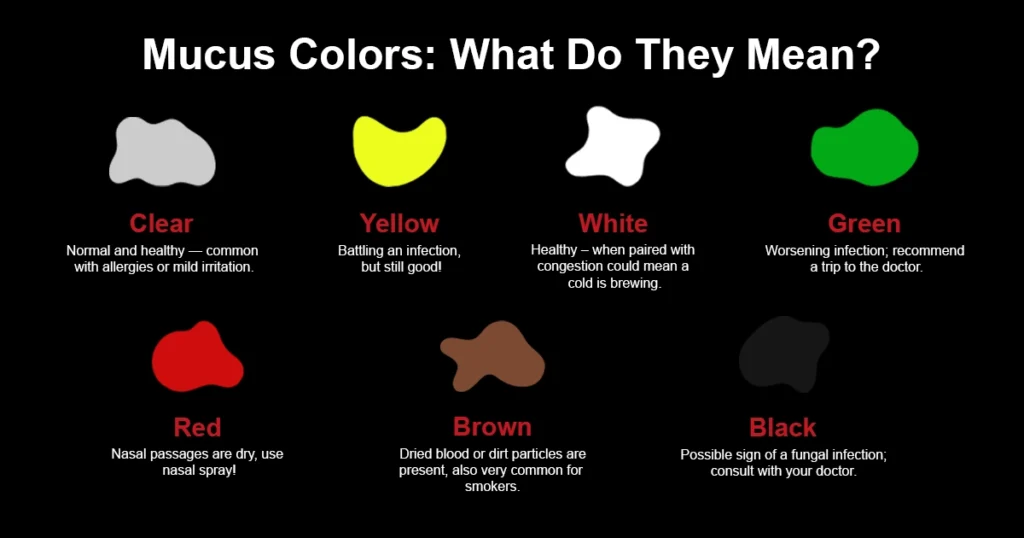
Mucus color reflects your body’s response to illness, allergies, or irritants. While color alone cannot diagnose disease, it offers valuable clues about your respiratory health. Observing changes in color alongside other symptoms can help guide timely care.
What Does Clear Mucus Mean
Clear mucus is a sign of normal, healthy respiratory function. It indicates well-hydrated nasal passages and effective immune defense. Surges in clear mucus often appear during early colds, mild allergies, or exposure to irritants like pollen or dry air. Clear mucus can also help your body naturally flush out inhaled particles and allergens before they reach the lungs.
What Does White Mucus Mean
White mucus signals slowed mucus flow due to swelling or inflammation in the nasal passages. This can occur during early viral infections like colds or when congestion is present. Dehydration or dry air may also cause mucus to thicken and appear whitish. Thickened white mucus may also indicate that your body is producing extra mucus to trap irritants more effectively.
What Does Yellow Mucus Mean
Yellow mucus suggests that your immune system is actively fighting infection or inflammation. White blood cells passing through the affected area give mucus its yellow hue. This is common in viral illnesses and sinus infections, often signaling your body’s natural recovery process.
What Does Yellow Mucus Indicate
- Active Immune Response: Your body’s white blood cells are responding to viruses or irritants.
- Transitional Phase: The change from clear to yellow mucus often reflects the early stages of infection.
- Allergic Reactions: Allergies can occasionally cause temporary yellow mucus without serious illness.
Does Yellow Mucus Mean Infection?
Not always. Yellow mucus often appears in viral colds and immune activity, but does not confirm bacterial infection. Diagnosis requires evaluation of additional symptoms like fever, pain, or persistent congestion. Yellow mucus alone cannot distinguish between a mild viral response and a more serious bacterial infection.
What Does Green Mucus Mean
Green mucus indicates a stronger immune response, often due to concentrated immune cells like neutrophils. This color frequently occurs during sinus infections, colds, or bronchitis. Green mucus alone does not confirm bacterial infection, as viral illnesses can also produce it. The green hue develops as enzymes from immune cells mix with the mucus while fighting pathogens.
Does Green Mucus Mean Infection?
Green mucus may indicate infection, but it is not definitive. Both viral and bacterial infections can produce green mucus. Healthcare providers consider additional symptoms, such as fever, duration of illness, and pain, before recommending treatment. Green mucus can persist even after viral infections start to improve, reflecting the body’s ongoing immune activity.
What Does Red Mucus Mean
Red or pink mucus contains blood, often caused by irritation, dry nasal passages, frequent nose-blowing, or trauma. Occasional streaks are usually minor, but repeated or heavy bleeding should prompt medical attention. Small amounts of blood in mucus can appear even during vigorous sneezing or coughing without indicating serious illness.
What Does Brown Mucus Mean
Brown mucus can result from dried blood, environmental particles like dust or smoke, or old nasal bleeding mixed with mucus. Smoking, pollution, or prolonged exposure to irritants commonly cause brownish discoloration. Environmental exposure or minor nasal bleeding over time can cause brown mucus to appear even in otherwise healthy individuals.
What Does Brown Mucus Indicate
- Dried Blood: Oxidized blood in nasal passages can darken mucus.
- Pollutants or Toxins: Inhaled particles from smoke or dusty environments can discolor mucus.
- Chronic Lung Conditions: Diseases like chronic bronchitis may produce darker mucus.
What Does Black Mucus Mean
Black mucus is rare and usually linked to inhalation of soot, smoke, coal dust, or other dark particles. In non-smokers, persistent black mucus may signal fungal infection or other serious conditions requiring medical evaluation. Black mucus may also develop when heavy particulate matter accumulates in the nasal passages over time.
When To Seek Emergency Care For Mucus
Most changes in mucus color are not emergencies, but you should seek prompt care if you experience symptoms that suggest a more serious health issue. Color changes paired with severe or persistent symptoms can signal infections or complications requiring medical attention.
- Difficulty breathing or shortness of breath.
- High fever or chills not improving with rest.
- Chest pain or persistent pain while coughing.
- Large amounts of blood in mucus.
- Mucus changes lasting more than 10 days with worsening symptoms.
- Confusion, dizziness, or extreme fatigue.
If you notice these symptoms, contact the Sugar Land Hospital for urgent evaluation and care.
St. Michael’s Elite Hospital – Expert Care for Respiratory Health
Changes in the color of your mucus can provide important clues about your respiratory health. What Does The Color Of Your Mucus Mean is a question many patients have, and timely evaluation can help ensure that underlying conditions are properly identified before they worsen.
At St. Michael’s Elite Hospital in Sugar Land, our skilled medical team offers thorough assessments, expert guidance, and personalized monitoring for patients concerned about persistent or unusual mucus changes. We emphasize patient education, supportive care, and preventive strategies to help you maintain healthy airways and overall wellness.