

What starts as mild throat irritation can quickly progress into pain that affects swallowing, speaking, and daily comfort. While many cases are temporary, some sore throats may signal infections or conditions that need medical attention. Understanding the warning signs early helps prevent complications and ensures faster recovery.
If symptoms become severe, persistent, or begin to interfere with breathing or swallowing, do not ignore them. Timely evaluation at an emergency facility such as St. Michael’s Elite Hospital, which also provides ER for sore throat, can help identify the cause and provide immediate care when needed.
What Is a Sore Throat?
A sore throat is inflammation and irritation of the throat that causes pain, scratchiness, or discomfort, especially while swallowing or speaking. It is one of the most common reasons people seek medical care in outpatient and emergency settings. According to NIH-based clinical data, around 70% to 90% of acute sore throat cases are viral in origin, while a smaller percentage are caused by bacterial infections such as streptococcal bacteria.
Sore Throat Symptoms That You Shouldn’t Ignore
- Pain that worsens while swallowing or speaking
- Persistent throat irritation or burning sensation
- Fever that does not improve with basic medication
- Swollen glands in the neck or jaw
- White patches or pus on the tonsils
- Hoarseness or voice changes lasting more than a few days
- Difficulty swallowing food, liquids, or saliva
- Sore throat lasting more than 7 days
- Ear pain along with throat discomfort
- Severe fatigue or body weakness with throat pain
If any of these warning signs occur, it is vital to locate the closest ER near me to ensure you receive immediate medical intervention.
What Causes Sore Throat
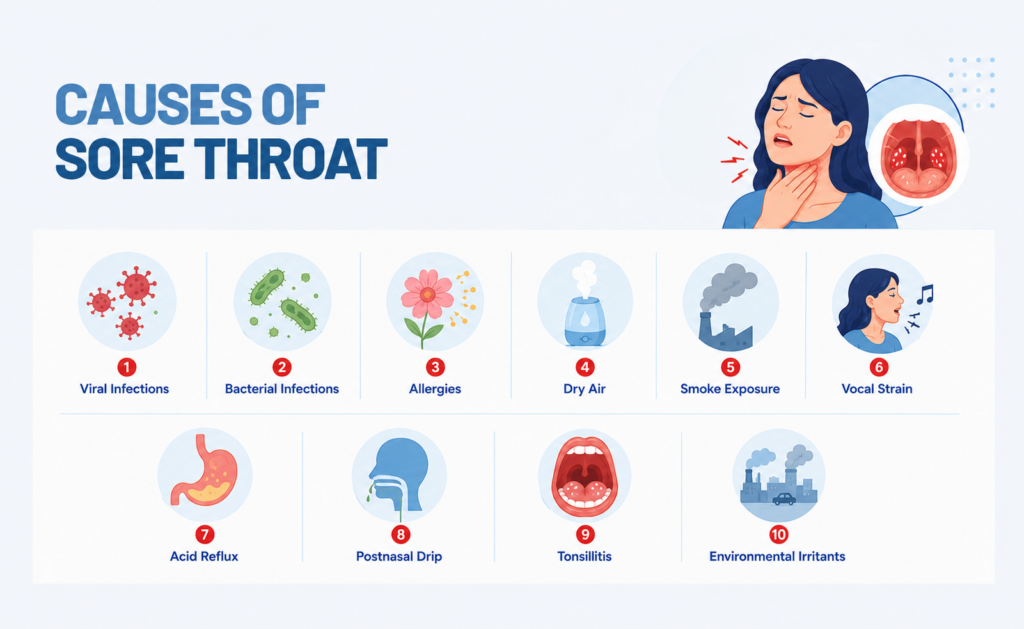
A sore throat can feel uncomfortable and disruptive, especially when it makes swallowing or speaking painful. It often appears suddenly and can vary from mild irritation to more intense discomfort. In many cases, understanding the underlying triggers helps with faster management and prevention of complications.
Viral Infections
Viral infections are the most common trigger of throat pain. They often come with symptoms like cough, runny nose, and mild fever. The discomfort usually improves within a few days with rest and fluids. Most cases do not require specific medical treatment.
Bacterial Infections
Bacterial infections can lead to more severe and persistent throat pain. They may cause high fever, swollen glands, and difficulty swallowing. Unlike viral cases, they often require medical evaluation and antibiotics. Early treatment helps prevent complications.
Allergies
Allergic reactions can irritate the throat due to constant postnasal drip. This leads to ongoing scratchiness and mild swelling. Symptoms may come and go depending on exposure. Managing allergens can significantly reduce discomfort.
Dry Air
Dry environments can strip moisture from the throat lining. This often causes irritation and a scratchy feeling, especially during sleep. It is more common in air-conditioned or heated rooms. Staying hydrated can help ease symptoms.
Smoke Exposure
Cigarette smoke and polluted air can irritate sensitive throat tissues. Even short exposure can lead to soreness or burning sensations. Long-term exposure may worsen symptoms over time. Avoiding smoke is important for recovery.
Vocal Strain
Speaking loudly, shouting, or prolonged talking can strain throat muscles. This can result in hoarseness and discomfort. It is commonly seen in people who use their voice extensively. Resting the voice helps speed up healing.
Acid Reflux
Acid reflux can cause stomach acid to irritate the throat. This often leads to burning pain and a sour taste. Symptoms may worsen after meals or when lying down. Lifestyle changes and treatment can help control it.
Postnasal Drip
Excess mucus draining down the throat can cause irritation. This leads to frequent throat clearing and soreness. It is commonly linked with colds and allergies. Treating the underlying issue provides relief.
Tonsillitis
Inflammation of the tonsils can cause significant throat pain. It may also include fever and difficulty swallowing. It can be caused by viruses or bacteria. Severe or recurring cases may need medical care.
Environmental Irritants
Dust, chemicals, and strong fumes can irritate the throat lining. This often leads to dryness and ongoing discomfort. People in certain work environments may be more affected. Reducing exposure helps prevent symptoms.
Sore Throat in Kids
Children often experience sore throats due to frequent infections and developing immunity. They may become irritable, refuse food, or complain of pain while swallowing. Because children may not clearly describe symptoms, parents should closely monitor changes in behavior, appetite, and fever. If symptoms worsen or do not improve, visiting urgent care for a sore throat can help ensure a timely diagnosis and proper treatment.
Sore Throat Medicine for Kids
- Paracetamol (Acetaminophen) – recommended by the doctor for pain and fever relief
- Ibuprofen – recommended by the doctor to reduce inflammation and discomfort
- Warm saline gargles – recommended by the doctor for throat soothing in older children
- Throat lozenges – recommended by the doctor for children who can safely use them
- Pediatric cough syrups – recommended by the doctor if cough is present
When to Go to the ER for a Sore Throat
A sore throat usually improves on its own, but certain symptoms can indicate a more serious condition that needs immediate medical attention. If the pain becomes severe, persists, or starts affecting breathing, swallowing, or hydration, it is important not to delay care. Prompt evaluation in an emergency setting can help prevent complications and ensure proper treatment.
- Severe difficulty breathing or swallowing, even liquids feel hard to take
- High fever that does not improve with basic medication
- Swelling in the neck or throat area
- Severe or worsening throat pain over time
- Drooling or inability to swallow saliva properly
- Sudden change in voice or muffled speech
- Rash appearing along with sore throat and fever
- Symptoms lasting more than a week without improvement
- Signs of dehydration or refusal to drink fluids
- Ear pain or severe headache along with throat pain
If these symptoms appear, it is important to seek emergency care near me immediately to get prompt medical evaluation and treatment.
How to Treat Sore Throat
Treatment for a sore throat depends on the underlying cause, but most mild cases improve with simple home care and supportive measures. The main goal is to reduce pain, keep the throat moist, and support recovery. However, if symptoms are severe, persistent, or linked with infection, medical treatment may be needed to prevent complications.
- Paracetamol (Acetaminophen) – recommended by the doctor for pain relief
- Ibuprofen – recommended by the doctor for inflammation control
- Warm salt water gargles – recommended by the doctor for soothing irritation
- Throat lozenges – recommended by the doctor for temporary relief
- Antibiotics – recommended by the doctor only for confirmed bacterial infections
- Steam inhalation – recommended by the doctor to reduce dryness
- Warm fluids and hydration – recommended by the doctor for faster recovery
Sore Throat Care at St. Michael’s Elite Hospital
A sore throat can range from mild discomfort to a sign of a more serious infection that requires immediate care. At St. Michael’s Elite Hospital, patients receive accurate diagnosis and timely treatment to address the root cause of symptoms.
When people search for what causes a sore throat, they often need both clarity and reassurance. Our medical team provides expert evaluation, personalized treatment plans, and continuous support to ensure safe recovery. With 24/7 emergency care, we help patients manage symptoms early and prevent complications.
Key Takeaways
- Most sore throats are mild but should still be monitored.
- Viral and bacterial infections are the most common reasons behind throat pain.
- Allergies, dry air, smoke, and acid reflux can also trigger symptoms.
- Severe pain, fever, or difficulty swallowing may need urgent medical care.
- Children may need special attention and doctor-recommended treatment.
- Early evaluation helps prevent complications and faster recovery.
- If symptoms become severe or persistent, consider visiting hospitals in Sugar Land, TX, for prompt medical evaluation and care.
Frequently Asked Questions
What causes a sore throat most often?
Viral infections such as the common cold and flu are the most common causes of sore throat. Allergies, dry air, and bacterial infections can also contribute.
What kills a sore throat fast?
Warm liquids, salt water gargles, throat lozenges, hydration, and rest may help relieve symptoms quickly. Antibiotics are only effective for bacterial infections.
When should I go to the ER for a sore throat?
Seek emergency care if you have difficulty breathing, trouble swallowing, severe swelling, dehydration, or a high fever with severe throat pain.
How long does a sore throat last?
A sore throat usually lasts 3–7 days if caused by a viral infection. If it lasts longer than a week or worsens, it may need medical attention.
What helps a sore throat?
Warm fluids, saltwater gargles, throat lozenges, rest, and staying hydrated can help ease soreness and speed up recovery.
Can allergies cause a sore throat?
Yes, allergies can cause a sore throat due to postnasal drip, where mucus irritates the throat lining.
Does Tylenol help with a sore throat?
Yes, Tylenol (acetaminophen) can help reduce throat pain and fever, but it doesn’t treat the underlying cause.
Can an Ear Infection Cause a Sore Throat?
Yes, an ear infection can cause a sore throat because the ear, nose, and throat are connected, allowing infection or inflammation to spread and cause referred throat pain.