

COVID-19 can spread quickly, and many people don’t realize they may be contagious even before symptoms begin. If you’re asking “How long are you contagious with COVID?”, the answer depends on the stage and severity of infection. Understanding the timeline helps protect your family, coworkers, and community while reducing complications through early action and proper care.
At Sugar Land ER, patients receive timely evaluation for COVID symptoms, contagious risk, and emergency complications. If symptoms worsen or breathing becomes difficult, immediate medical attention is strongly recommended.
What Is COVID?
COVID-19 is a viral respiratory infection caused by the SARS-CoV-2 virus. It spreads mainly through respiratory droplets when an infected person coughs, sneezes, talks, or breathes. In some cases, individuals may spread the virus even before symptoms appear, increasing the risk of rapid community transmission.
A NIH-supported study found that combining isolation, quarantine, masking, and social distancing reduced COVID-19 transmission by up to 80%, showing that layered public health measures are highly effective in controlling outbreaks.
COVID Symptoms That You Shouldn’t Ignore
COVID-19 symptoms can range from mild to severe, but some warning signs should never be ignored as they may indicate serious illness or complications requiring urgent care.
- Difficulty breathing or shortness of breath.
- Persistent chest pain or pressure.
- High fever that does not improve.
- Severe fatigue or weakness.
- Confusion or difficulty staying awake.
- Bluish lips or face (sign of low oxygen).
- Worsening cough or trouble speaking in full sentences.
How Long Is COVID Contagious?
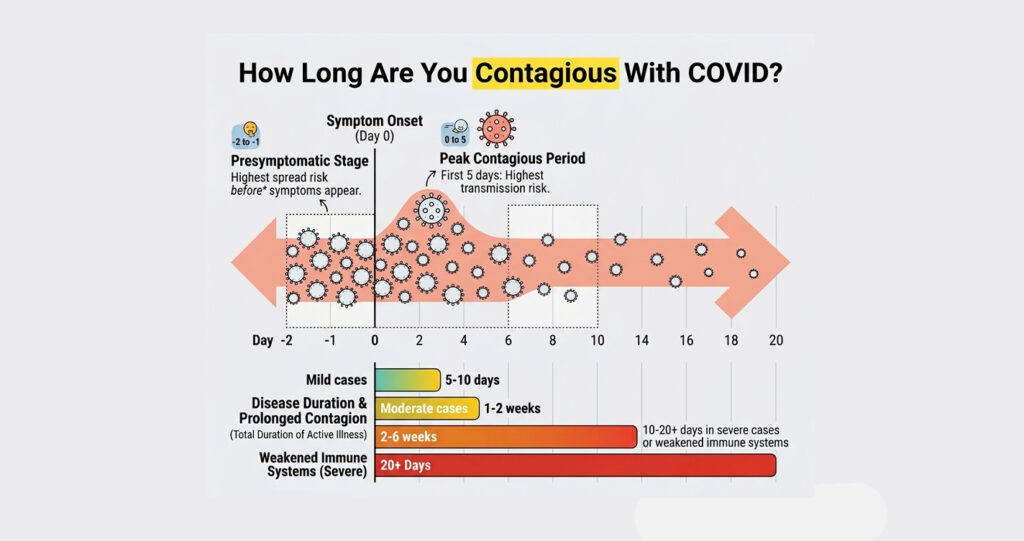
COVID-19 is most contagious around the time symptoms first appear, but the risk of spreading the virus can start earlier and continue even after you begin to feel better. The contagious period can vary depending on the severity of illness, immune response, and whether treatment or isolation is followed properly.
- 1–2 days before symptoms start (presymptomatic stage)
- First 5 days after symptoms begin (highest transmission risk)
- Up to 10 days after symptom onset in mild to moderate cases
- 10–20+ days in severe cases or weakened immune systems
When Is COVID Most Contagious?
COVID-19 spreads most easily when the amount of virus in the body is at its peak, which often happens around the early phase of infection. Many people unknowingly transmit the virus during this time because symptoms may be mild or not yet present.
- 1–2 days before symptoms appear (highest presymptomatic spread risk)
- First 2–3 days after symptoms begin (peak contagious period)
- During active symptoms like fever, cough, or fatigue
- In close contact settings such as homes or crowded indoor spaces
How Long Does COVID Last?
The duration of COVID-19 can vary widely depending on the individual’s age, immune health, and severity of infection. Most people experience mild to moderate illness and gradually recover with rest and supportive care. However, some may have lingering symptoms that last beyond the initial infection phase, especially in more severe cases.
- Mild cases: about 5–10 days for most acute symptoms
- Moderate cases: around 1–2 weeks of active illness
- Severe cases: 2–6 weeks or longer, depending on complications
- Long COVID: symptoms like fatigue or brain fog may persist for weeks or months after recovery
COVID Test & Diagnostics
COVID testing helps confirm infection early, even before severe symptoms develop, allowing timely isolation and treatment. Diagnosis is usually based on a combination of symptoms, exposure history, and laboratory testing. Early detection plays a key role in preventing the spread of the virus and reducing complications.
- RT-PCR test: Most accurate test that detects active COVID infection
- Rapid antigen test: Provides quick results for current infection screening
- At-home test kits: Convenient option for initial self-check
- Chest X-ray or CT scan: Used in severe cases to assess lung involvement
- Pulse oximetry: Measures oxygen levels to detect breathing complications early
When to Go to the ER
COVID-19 can usually be managed at home in mild cases, but certain symptoms signal a medical emergency and should never be ignored. If the infection starts affecting breathing, oxygen levels, or overall consciousness, it may indicate a serious complication requiring emergency care for COVID-19.
- Difficulty breathing or shortness of breath at rest
- Persistent chest pain or pressure
- Oxygen levels below normal (if monitored at home)
- Confusion, fainting, or trouble staying awake
- Blue or pale lips, face, or fingertips
- Severe or rapidly worsening symptoms
How to Treat COVID
Treatment for COVID-19 depends on how severe the symptoms are and the patient’s overall health condition. Most mild cases can be managed at home with rest, hydration, and careful monitoring of symptoms.
- Rest and hydration to support recovery and reduce weakness
- Fever and pain relief medications prescribed by a doctor to manage symptoms safely
- Isolation to help prevent spreading the virus to others
- Antiviral medications or oxygen therapy prescribed by a doctor for moderate to severe cases
- Emergency care at Sugar Land ER if breathing problems, chest pain, or severe symptoms develop
How to Prevent Spreading COVID
Preventing the spread of COVID-19 is essential to protect your family, coworkers, and vulnerable individuals around you. Even if symptoms are mild, you can still transmit the virus, especially in the early stages of infection.
- Stay home and isolate if you test positive or feel unwell
- Wear a mask in indoor or crowded public places
- Wash hands frequently with soap and water or use sanitizer
- Avoid close contact with others, especially high-risk individuals
- Cover coughs and sneezes with a tissue or elbow
- Clean and disinfect frequently touched surfaces regularly
COVID Contagious Period: Care at St. Michael’s Elite Hospital
Are you wondering “how long are you contagious with COVID” after testing positive or developing symptoms? It’s important to know that the virus can spread even before symptoms appear or during mild illness. At St. Michael’s Elite Hospital, patients receive prompt evaluation and clear medical guidance to better understand their contagious period and reduce the risk of transmission.
If symptoms persist or begin to worsen, delaying care can increase the risk of complications. The medical team at St. Michael’s Elite Hospital provides expert support to help you understand your recovery timeline and safety precautions. Getting clarity on “how long are you contagious with COVID” helps you protect yourself and those around you more effectively.
Key Takeaways on COVID Contagiousness
- COVID-19 can spread 1–2 days before symptoms appear (presymptomatic stage)
- The highest risk of transmission is usually during the first 2–5 days after symptoms begin
- Most mild cases may remain contagious for about up to 10 days after symptom onset
- Severe cases or weakened immunity may stay contagious for 10–20+ days
- Some people may still spread the virus even after feeling better
- Early testing, isolation, and precautions help reduce transmission risk
- Seek urgent care if symptoms worsen at St. Michael’s Elite Hospital
FAQs
How bad is COVID right now?
COVID-19 is generally less severe today due to immunity from vaccines and prior infections, but it can still lead to serious illness in older adults and high-risk individuals. Hospitalization and complications remain possible in severe cases.
Is diarrhea a symptom of COVID?
Yes, COVID-19 can cause gastrointestinal symptoms such as diarrhea, nausea, or stomach discomfort, although respiratory symptoms like cough and sore throat are more common.
Can you have COVID without a fever?
Yes, many people with COVID do not develop a fever. Symptoms like fatigue, cough, headache, or loss of taste and smell can still occur even without temperature changes.
How long should you isolate with COVID?
Isolation typically lasts at least 5 days from symptom onset or a positive test, followed by continued precautions such as masking if symptoms are improving. Duration may vary based on severity and medical advice.