
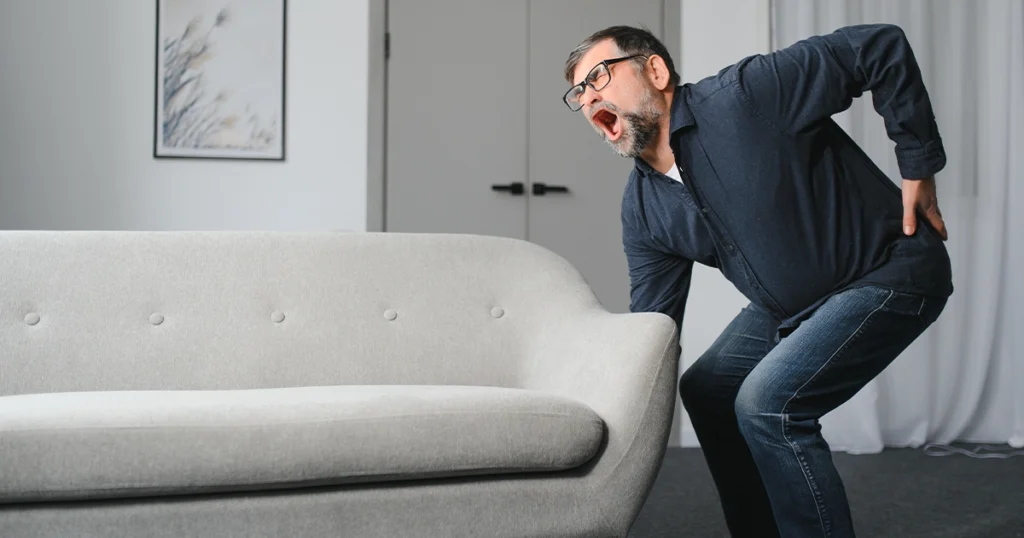
Lower back pain is one of the most common health issues worldwide, affecting people of all ages and lifestyles. What Causes Lower Back Pain can range from muscle strain and structural issues to lifestyle factors, making early recognition essential for effective management and prevention.
Even mild or intermittent pain can affect daily activities and overall quality of life. At our Sugar Land ER, experienced providers focus on accurate diagnosis and personalized care plans to relieve pain and restore mobility, helping patients return to normal function safely.
What Is Lower Back Pain
Lower back pain refers to discomfort or pain in the area between the bottom of the ribcage and the top of the legs. It can be acute or chronic and range from mild soreness to severe, debilitating pain. According to a PubMed study, 33.3% of medical students reported experiencing lower back pain, highlighting its prevalence even among young adults.
Lower Back Pain Symptoms
- Persistent aching or sharp pain in the lower back.
- Pain that radiates down the buttocks or legs.
- Reduced flexibility or difficulty standing or bending.
- Muscle spasms or stiffness in the lower back.
- Trouble walking or lifting objects.
Lower Back Pain Causes
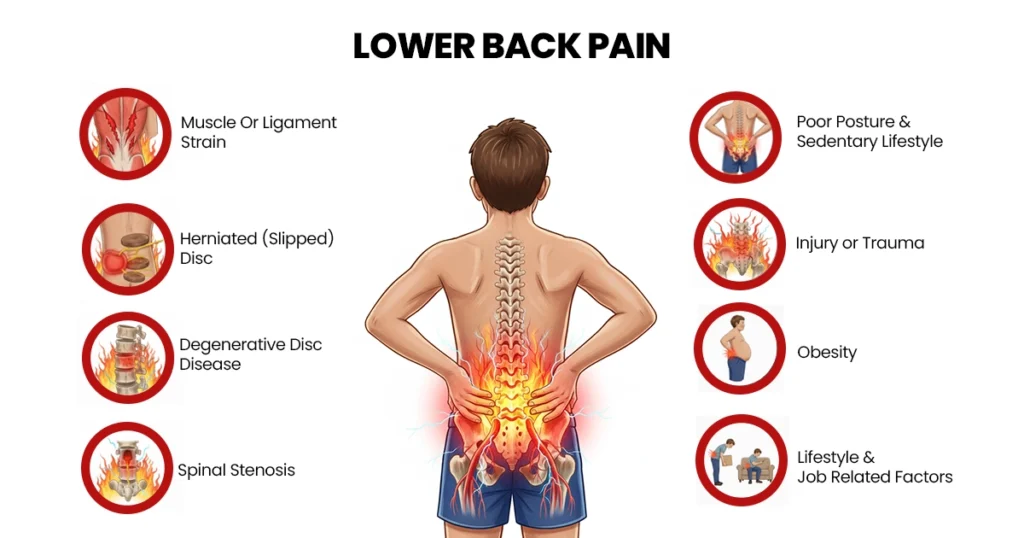
Lower back pain can arise from a variety of factors, ranging from minor strains to underlying structural issues. It often develops gradually and can significantly impact daily activities, work, and overall quality of life. Understanding that this pain is common and treatable can help reduce anxiety and encourage early intervention.
1. Muscle Or Ligament Strain
Muscle or ligament strain occurs when these tissues are overstretched or torn due to heavy lifting, sudden twisting, or repetitive movements. This can lead to inflammation, soreness, and limited mobility. Maintaining proper posture, core strength, and gradual stretching reduces the risk of strain. Strains often heal within a few weeks with rest, gentle exercises, and avoiding aggravating movements.
2. Herniated (Slipped) Disc
A herniated disc happens when the soft inner material of a spinal disc protrudes through its outer layer, potentially pressing on nearby nerves. This can cause radiating pain, numbness, or tingling in the legs. Avoiding improper lifting and staying physically active helps prevent disc herniation. Early diagnosis with imaging can help guide targeted treatment and prevent chronic nerve damage.
3. Degenerative Disc Disease
Over time, spinal discs lose hydration and elasticity, reducing their cushioning ability between vertebrae. This degeneration can result in chronic pain, stiffness, and decreased mobility. Strengthening the core and maintaining proper posture can slow progression and ease symptoms. Lifestyle factors like regular exercise and maintaining a healthy weight can help slow disc degeneration.
4. Spinal Stenosis
Spinal stenosis is a narrowing of the spinal canal that compresses nerves, causing pain, tingling, or weakness, especially while walking or standing. Physical therapy and posture correction can help relieve symptoms and improve function. In severe cases, surgical intervention may be necessary to decompress the spinal canal.
5. Poor Posture & Sedentary Lifestyle
Extended periods of sitting or poor posture strain the lower back and weaken supporting muscles. Over time, this increases the risk of chronic discomfort. Regular movement, ergonomic seating, and strengthening exercises can prevent long-term problems. Even small changes, like adjusting chair height or taking walking breaks, can significantly reduce strain.
6. Injury or Trauma
Falls, accidents, or sports injuries can damage vertebrae, ligaments, or muscles in the lower back. Trauma may cause acute pain and, if untreated, lasting complications. Early evaluation and rehabilitation are essential to prevent chronic issues. Wearing protective gear during sports and practicing safe lifting techniques can reduce injury risk.
7. Obesity
Excess body weight puts additional stress on the spine and supporting structures, accelerating wear-and-tear on discs and joints. Maintaining a healthy weight and performing core-strengthening exercises can reduce the risk of lower back pain. Obesity is also linked to inflammation that can worsen chronic pain symptoms over time.
8. Lifestyle & Job-Related Factors
Jobs involving heavy lifting, prolonged standing, or repetitive motions increase the likelihood of lower back pain. Physical and psychological stress can worsen symptoms. Ergonomic adjustments, regular breaks, and stress management can minimize pain. Incorporating proper lifting techniques and using supportive equipment can significantly reduce occupational back injuries.
Is Lower Back Pain Dangerous?
In most cases, lower back pain is not immediately dangerous and resolves with rest, exercise, and conservative care. However, certain signs may indicate serious complications requiring urgent medical attention. Watch for these symptoms:
- Sudden or progressive numbness or weakness in legs.
- Loss of bladder or bowel control.
- Severe, unrelenting pain that doesn’t improve with rest.
- Pain after a major injury or fall.
- Fever or unexplained weight loss accompanying back pain.
If you experience any of the above warning signs, contact Sugar Land Hospital immediately to prevent potentially serious outcomes.
Lower Back Pain Treatment
Treating lower back pain depends on its cause, duration, and severity. Many people find relief with simple measures, while others may require a combination of therapies. Early intervention, proper guidance, and lifestyle adjustments are key to reducing pain and preventing recurrence.
- Over‑The‑Counter Medicines: Most doctors recommend NSAIDs (like ibuprofen or naproxen) to reduce inflammation and alleviate pain in acute episodes.
- Prescription Medications: If pain persists, doctors may recommend muscle relaxants or stronger pain relievers for short periods.
- Physical Therapy: Targeted exercises and manual therapy strengthen muscles and improve mobility.
- Hot/Cold Therapy: Alternating heat and ice can reduce swelling and relax muscles.
- Chiropractic Care: Spinal adjustments may help relieve certain types of mechanical pain.
- Injections: Steroid injections near nerve roots help reduce inflammation and severe pain.
- Surgery: Recommended only for specific structural issues like severe herniation or spinal instability.
Exercises For Lower Back Pain
- Core Strengthening Exercises: Strengthening abdominal and back muscles supports spinal alignment and reduces strain.
- Pelvic Tilts: Gentle tilting exercises improve posture and stability of spinal muscles.
- Bridging: Helps strengthen glutes and lower back muscles essential for daily movement.
Stretches For Lower Back Pain
- Hamstring Stretch: Tight hamstrings can pull on the lower back — stretching them improves back flexibility.
- Child’s Pose (Yoga): This gentle stretch relaxes the spine and relieves tension in the lower back.
- Knee‑To‑Chest Stretch: Pulling knees toward the chest gently elongates the lower back muscles.
St. Michael’s Elite Hospital – Lower Back Pain Care
Persistent lower back pain can affect daily life, work, and overall mobility. Understanding what causes lower back pain and seeking timely medical evaluation is essential to prevent long-term complications and improve quality of life. Early assessment helps identify the underlying cause and guides personalized treatment strategies.
At St. Michael’s Elite Hospital, a leading Sugar Land Hospital, our experienced team provides comprehensive evaluations, advanced diagnostic testing, and compassionate care for patients with lower back pain. We focus on evidence-based treatment plans, patient education, and ongoing support to help individuals regain strength, mobility, and comfort safely.